

Clinically reviewed by the BioDental team at ROZE BioHealth and BioDental Clinics, Dubai.
For decades, the answer to a badly infected or necrotic tooth was the same: remove the entire pulp, disinfect the canal, and fill it with an inert material. It worked, and it saved millions of teeth from extraction, but it also left the tooth biologically dead. Regenerative endodontics is changing that conversation. Instead of replacing the pulp with a filler, it invites the body to rebuild what was lost, using its own stem cells, growth factors, and healing biology.
At ROZE BioHealth and BioDental Clinics in Dubai, regenerative endodontics is delivered as part of a wider biological dentistry philosophy. Care is led by Dr. Jahida Al Jamal, a Biological and Regenerative Dentist with advanced training in regenerative endodontic procedures (REP), biomimetic restorations, safe amalgam removal, ozone therapy, and PRF treatments. Her clinical approach is grounded in one clear principle: dentistry should work with the body rather than against it, preserving as much natural tooth structure as possible.
This guide explains what regenerative endodontics really is, how it differs from a conventional root canal, who it is suitable for, and how the biological framework at ROZE supports the best possible outcomes.
What Is Regenerative Endodontics?
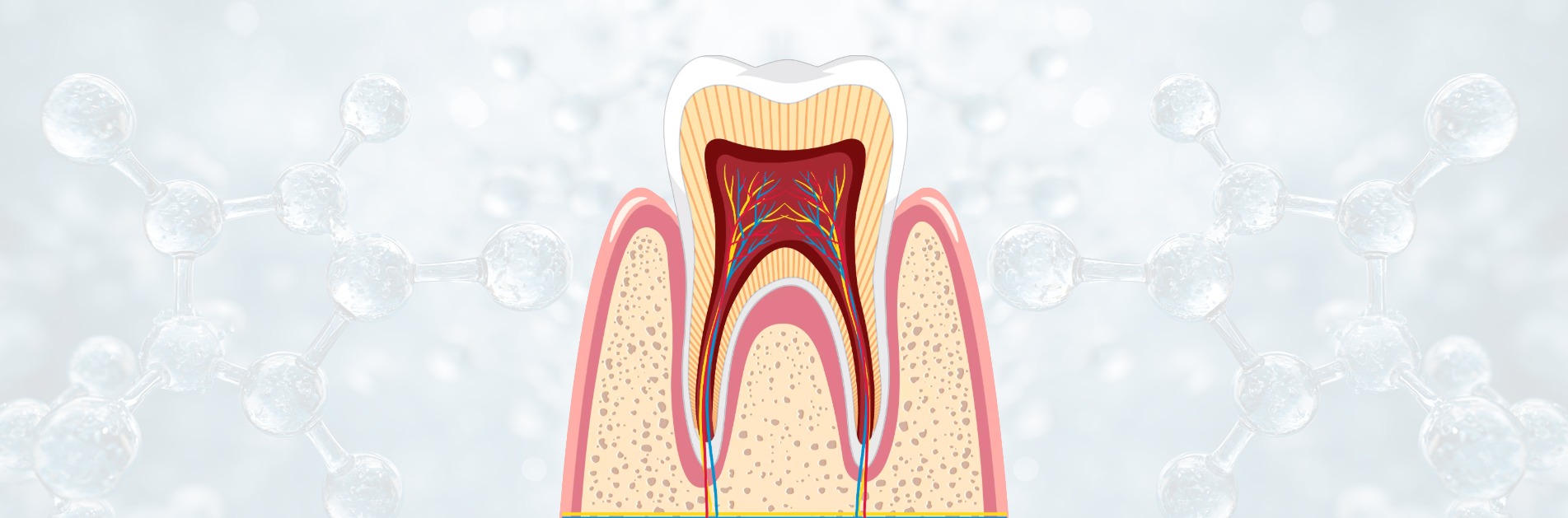
Regenerative endodontics is a biologically driven branch of endodontic care that aims to restore the vitality and function of a diseased or immature tooth rather than simply eliminating its pulp. It sits at the intersection of dentistry, stem cell science, and tissue engineering.
Formally defined by the American Association of Endodontists, regenerative endodontic procedures are biologically based methods designed to replace damaged pulp tissues with new, functional tissue, allowing continued root development, restored innervation, and preserved biological response inside the tooth.
Rather than filling the canal with gutta-percha and inert cement, the regenerative approach relies on three biological pillars:
- Stem cells, particularly the stem cells of the apical papilla (SCAP), dental pulp stem cells (DPSCs), and cells from the periodontal ligament
- Growth factors, including PDGF, TGF-β, VEGF, and BMPs, which orchestrate healing and tissue formation
- A biological scaffold, most commonly an induced blood clot or platelet-rich fibrin (PRF), which provides the three-dimensional structure new tissue needs to organise around
When these three elements come together in a properly disinfected canal, the tooth is given a genuine chance to heal, mature, and continue functioning as a living unit.
Why This Matters: The Limitations of Traditional Root Canals
Traditional root canal treatment has been one of dentistry’s great success stories. It reliably eliminates infection, resolves pain, and saves teeth that would otherwise be lost. From a biological dentistry perspective, however, it comes with real trade-offs that deserve honest discussion:
The pulp is removed entirely, leaving the tooth without its blood supply, nerve supply, and internal defense system. The canal is filled with inert, non-living material, which cannot respond to future insult, remodel, or regenerate. In immature permanent teeth, particularly in children and adolescents, conventional root canal treatment halts further root development, leaving thin, fragile roots that are structurally vulnerable for the rest of the patient’s life. Long-term, non-vital teeth can become more brittle and more prone to fracture.
Regenerative endodontics was developed specifically to address these limitations. It is not a replacement for every root canal, but where it is clinically appropriate, it offers a meaningfully more biological outcome.
Regenerative Endodontics vs Traditional Root Canal: A Clear Comparison
Who Is a Candidate for Regenerative Endodontics?
The most established indication for regenerative endodontics is the necrotic immature permanent teeth. These are typically young adult teeth in children and adolescents where the root has not fully formed at the time of infection or trauma occurs. Without regenerative treatment, these teeth are locked into a state of arrested development. With it, they have a genuine chance to complete root formation.
Common clinical scenarios include:
- Traumatic dental injuries in children and teenagers
- Complicated crown fractures with pulp exposure in immature teeth
- Necrotic immature permanent teeth secondary to deep decay
- Teeth previously treated with apexification that show incomplete healing
- Selective cases of mature adult teeth where a biological approach is clinically appropriate
An honest clinical evaluation determines whether a regenerative approach is likely to succeed. Not every case is a candidate, and Dr. Jahida is clear with patients about when traditional endodontics is the more predictable option.
The Science: How Regeneration Actually Works Inside a Tooth
Regenerative endodontics is not a promise of a perfectly rebuilt pulp. It is a carefully engineered clinical process that gives the body’s own biology the best possible conditions to work.
- Disinfection. The canal is thoroughly disinfected using gentle irrigation protocols and, at ROZE, is supported by ozone therapy where appropriate. This step is critical, because regeneration cannot succeed in the presence of persistent infection.
- Medicament placement. A calcium hydroxide or dilute antibiotic paste may be placed for a short period between visits to further reduce the microbial load without damaging the stem cell population.
- Stem cell recruitment. Once the canal is clean, the apical papilla, the biological reservoir of stem cells at the developing root tip, is gently stimulated. This releases stem cells, growth factors, and progenitor cells into the canal.
- Scaffold placement. A three-dimensional biological scaffold is created inside the canal. The most established scaffold historically has been an induced blood clot. At ROZE, PRF (platelet-rich fibrin), prepared from a small sample of the patient’s own blood, is often preferred. PRF is completely autologous, rich in growth factors, and provides a denser, longer-acting fibrin matrix for new tissue to organize around.
- Biocompatible coronal seal. A bioceramic or MTA (mineral trioxide aggregate) barrier is placed above the scaffold, followed by a well-sealed biocompatible restoration. The seal is essential to prevent re-infection during healing.
- Biological healing. Over the following weeks and months, tissue organizes inside the canal, the root continues to develop where possible, and the tooth’s biological response begins to be restored. Follow-up imaging over 6 to 24 months is used to monitor healing and root maturation.
Materials Matter: The Biological Layer at ROZE
Because ROZE is fundamentally a biological dentistry clinic, the materials used in every step of a regenerative procedure are chosen for their biocompatibility and their alignment with the body’s own healing biology. This includes:
- PRF from the patient’s own blood as the primary scaffold and growth factor source
- Ozone therapy for gentle, effective disinfection of the canal system
- Bioceramic materials and MTA as coronal barriers, chosen for their proven interaction with pulp and periodontal tissues
- Biomimetic restorations, which restore lost tooth structure with materials that behave mechanically and chemically like natural enamel and dentin
- Strictly metal-free protocols throughout, aligned with ROZE’s wider mercury-free, biocompatible philosophy
This is not just a technical preference. It shapes the biological outcome. A regenerative procedure completed with inflammatory or bio-inert materials is fundamentally different from one delivered inside a fully biological framework.
Meet Dr. Jahida Al Jamal
Biological and Regenerative specialist
Dr. Jahida Al Jamal is a Biological and Regenerative specialist at ROZE BioHealth and BioDental Clinics, practicing from the ROZE The Greens location in Arabic and English. Her clinical training reflects the depth needed for genuinely biological, regenerative work. Beyond her foundation in general and cosmetic dentistry, she holds advanced training in:
- Biological dentistry
- Regenerative endodontics (REP)
- Biomimetic restorations
- Safe amalgam removal (SMART protocol principles)
- Ozone therapy
- PRF treatments
Her clinical expertise spans general dentistry, endodontics, restorative dentistry, and cosmetic dentistry, delivered within a framework that consistently prioritizes minimal intervention and biological compatibility.
Her philosophy is straightforward. Dentistry should be safe, minimally invasive, and biologically friendly, helping the body heal naturally while preserving as much of the patient’s own tooth structure as possible. She is known for a thorough, compassionate approach, and for her ability to explain complex procedures in a way that leaves patients genuinely informed rather than overwhelmed. Whether a patient needs advanced root canal alternatives, metal-free dentistry, or holistic smile care, her aim is the same: comfortable, personalized care focused on long-term wellness.
The Patient Journey at ROZE
A typical regenerative endodontic pathway at ROZE looks like this.
- Consultation and diagnosis. Dr. Jahida reviews your history, examines the tooth clinically and radiographically, and determines whether the case is suitable for a regenerative approach. Not every tooth is, and honesty here matters more than optimism. In cases where regeneration is unlikely to succeed, an alternative biological approach is discussed openly.
- Treatment planning. If regeneration is appropriate, the plan is explained in detail: the number of visits typically required, what happens at each stage, the role of PRF and ozone, and what long-term follow-up will look like.
- First visit. The tooth is gently accessed, the canal is disinfected, and where appropriate an intracanal medicament is placed. Ozone therapy is used to support disinfection.
- Second visit (usually 2 to 4 weeks later). Once the canal is confirmed disinfected, a small blood draw allows the preparation of PRF. Stem cells are recruited from the apical region, the PRF scaffold is placed, a bioceramic barrier is positioned above it, and the tooth is sealed with a biomimetic restoration.
- Follow-up. Follow-up radiographs at 6, 12,18 and 24 months monitor healing, root maturation, and the biological response of the tissue. Most patients do well throughout this period and require nothing further beyond routine care.
The healing process is gradual, and results improve over months rather than days. That is a feature of biological healing, not a limitation of the technique.
What Regeneration Can and Cannot Do
Honest expectations produce better outcomes. Regenerative endodontics can:
- Encourage continued root development in immature teeth
- Support the formation of new tissue inside the canal
- Preserve the tooth in the mouth with a more biologically active response
- Reduce the long-term brittleness of teeth with thin root walls
- Avoid the placement of large volumes of inert filler material
It cannot always:
- Fully replicate the original healthy pulp
- Succeed in every case, particularly where infection has been severe or prolonged
- Deliver instant results, since healing is measured in months
- Substitute for excellent oral hygiene, timely intervention, and follow-up care
A thorough consultation is the best way to understand what is realistic for a specific tooth.
Regenerative Endodontics in the Context of Biological Dentistry
At ROZE, regenerative endodontics does not sit in isolation. It is one expression of a wider biological dentistry philosophy that runs through every treatment room. That philosophy is defined by a few consistent commitments:
- Preserve natural tooth structure wherever possible
- Use biocompatible, non-toxic materials at every stage
- Support the body’s own healing biology through PRF, ozone, and biomimetic principles
- Avoid unnecessary metal, including mercury amalgam
- Consider the whole body, understanding that oral health is deeply connected to systemic health
Regenerative endodontics fits this framework naturally. It is dentistry that respects the tooth as a living organ, not simply a structure to be repaired.
Regenerative Endodontics in Dubai: Why It Matters Here
Dubai is home to a health-literate, wellness-driven population that increasingly asks a different set of questions about dental care. Parents ask what will happen to their child’s tooth in ten or twenty years, not just what will resolve the pain today. Adults ask about materials, biocompatibility, and long-term consequences. Patients ask whether there is a more biological option before defaulting to a conventional root canal.
Regenerative endodontics offers a considered, science-led answer to those questions, particularly for children and adolescents whose teeth are still developing, and for patients who want to preserve as much of their natural biology as possible.
Risks and Considerations
A few honest notes ensure the right expectations:
- Not every tooth is a candidate. Case selection matters enormously.
- Success is not guaranteed. Regenerative endodontics has strong outcomes in appropriate cases, but biological healing depends on many factors, including infection severity, patient age, immune status, patient compliance and follow-up care.
- Regeneration requires patience. Meaningful root maturation and tissue formation is a process measured over months.
- Follow-up is essential. Regular review appointments and radiographs allow early detection of any need to adjust the plan.
- If regeneration is not the right approach, a conventional endodontic option, or in some cases extraction with a biocompatible replacement, may be the more responsible clinical choice. Dr. Jahida discusses these possibilities openly.
Frequently Asked Questions
What is regenerative endodontics in simple terms?
Regenerative endodontics is a biological alternative to a traditional root canal. Instead of removing the pulp and filling the canal with an inert material, it uses the body’s own stem cells, growth factors, and a biological scaffold (often PRF) to support new tissue formation inside the tooth and, where possible, continued root development.
Is regenerative endodontics safer than a traditional root canal?
Both approaches are safe when performed correctly. Regenerative endodontics is often preferred from a biological dentistry perspective because it preserves more of the tooth’s natural biology and avoids filling the canal with inert material.
Who is the ideal candidate for a regenerative endodontic procedure?
The clearest candidates are children and adolescents with immature permanent teeth that have become necrotic due to trauma or deep decay. Selective adult cases may also be appropriate.
Does it hurt?
No more than a conventional root canal, and often less. The procedure is delivered under local anaesthesia, and post-operative discomfort is typically mild.
How many visits does it take?
Most cases require two clinical visits, followed by scheduled follow-up radiographs over 6 to 24 months to confirm healing and root maturation.
How long does healing take?
Biological healing is gradual. Meaningful signs of tissue formation and root development typically become visible over several months, and imaging follow-up continues for 1 to 2 years.
Is PRF used at ROZE?
Yes. Wherever appropriate, ROZE uses PRF (platelet-rich fibrin), prepared from the patient’s own blood, as the biological scaffold in regenerative endodontic procedures. It is autologous, rich in growth factors, and fully aligned with biological dentistry principles.
Is regenerative endodontics metal-free?
Yes. At ROZE, all regenerative endodontic and restorative work is completed with metal-free, biocompatible materials, in line with the clinic’s biological dentistry protocols.
How successful is regenerative endodontics?
Outcomes depend on case selection, infection control, and follow-up care. In appropriate cases, published clinical evidence supports strong outcomes for pain resolution, tissue formation, and continued root development.
Can I get regenerative endodontics for a fully mature adult tooth?
In some cases, yes. Case selection is more nuanced in mature teeth, and Dr. Jahida will assess whether the tooth is likely to respond well to a regenerative approach or whether another biological option is more predictable.
Where in Dubai is Dr. Jahida based?
Dr. Jahida Al Jamal practices at the ROZE The Greens clinic in Arabic and English.
A Final Thought
A tooth is not simply a piece of structural material to be patched. It is a living organ with its own biology, blood supply, and healing capacity. Regenerative endodontics honors that reality. It gives teeth the chance to heal rather than simply be sealed, and it gives patients, especially children and adolescents, a genuinely biological path forward when infection or trauma would once have meant a permanently non-vital tooth or extraction.
If you would like to explore whether a regenerative endodontic approach is right for you or your child, Dr. Jahida Al Jamal and the ROZE BioDental team would be glad to walk you through your options, honestly, in detail, and within a clinical framework built specifically around biological, minimally invasive, whole-body dental care.