

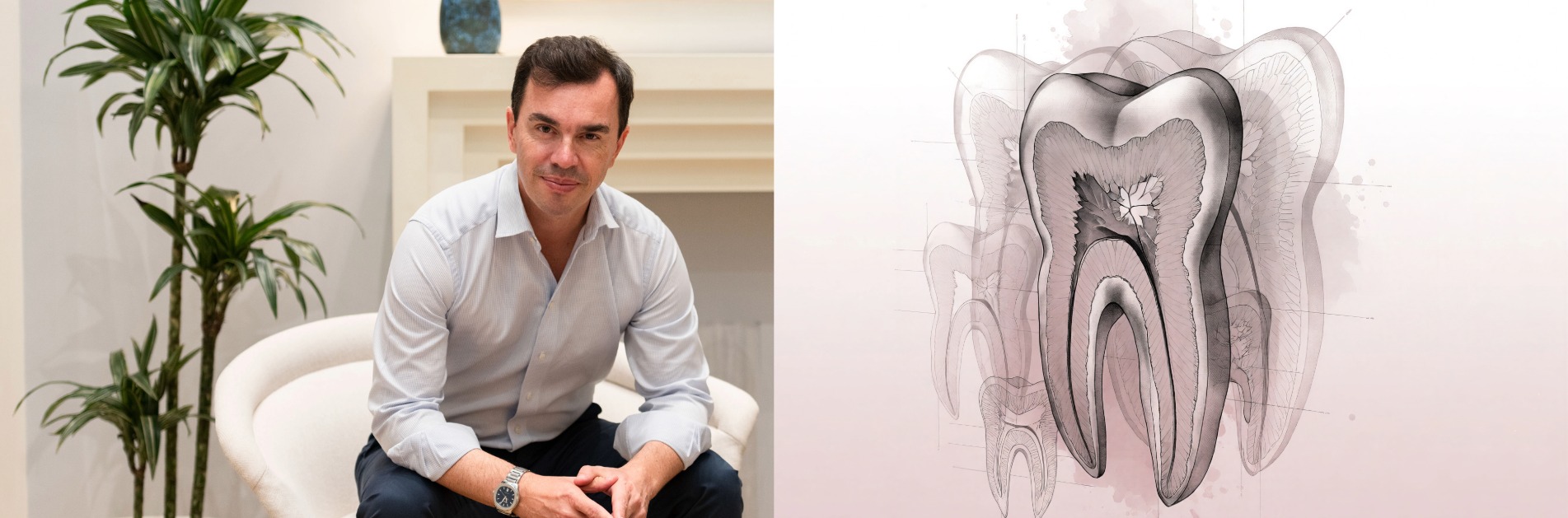
A perspective piece featuring Dr. David Roze, Founder and CEO of ROZE BioHealth and BioDental Clinics, Dubai. Biological Dentist and Specialist Implantologist.
For most of the twentieth century, dentistry sat quietly at the edge of medicine. Teeth were treated as structures. The mouth was treated as a room. The rest of the body was somebody else’s specialty. That view is no longer defensible. A steadily accumulating body of research is showing that what happens in the mouth is not just related to systemic health, it drives systemic health, from the composition of the gut microbiome to the biology of neurodegenerative disease to the state of the lungs and airway.
At ROZE BioHealth and BioDental Clinics in Dubai, this is not framed as an emerging trend. It has been the foundation of how we practice from the beginning. Dr. David Roze has spent his career pushing the conversation about the mouth’s relationship to the body several steps beyond where mainstream dentistry has been comfortable going. This article is a synthesis of that thinking, structured around the four connections he considers most consequential: teeth, gut, brain, and lungs
The Central Idea: The Mouth Is a Mirror to the Body
Dr. David Roze’s guiding principle is direct. The mouth is not a separate system. It is a mirror to the body, a highly active biological interface that reflects what is happening internally and continuously feeds back into it. In his clinical view, the modern epidemic of chronic disease (inflammatory, metabolic, neurological, and respiratory) cannot be understood without accounting for what is happening in the oral cavity. And in his view, the most important upgrade a patient can make to their long-term health is often not a new supplement or a new diet, but a serious biological reassessment of their mouth.
This is what biological dentistry brings to the table that conventional dentistry has historically missed.
About Dr. David Roze
Dr. David Roze is one of the pioneering voices bringing biological dentistry to the Middle East. He began his dental training at Rennes University of Dentistry in France, followed by a surgical internship in Lille, before earning his specialisation in Implantology and Oral Surgery at Paris VI University. His pursuit of the most scientifically sound and health-focused approaches led him and his team to Switzerland for advanced training in biological dentistry, biocompatible materials, and nutrition protocols, and to integrate non-metal ceramic implants into his practice as the biocompatible standard.
He has called Dubai home since 2003, alongside his wife Dr. Agnès Roze, Specialist Paediatric Dentist and co-founder of the ROZE clinics. He practices across all three ROZE locations in Jumeirah, DIFC, and The Greens, in French and English.
A personal philosophy shaped by his early years studying violin at the French Conservatory of Music runs through the way he runs the clinics. A well-functioning practice, in his view, is a symphony: a harmonious collaboration between BioDental, BioHealth, and BioAesthetic clinicians, all working together to produce the best possible outcomes for the patient. That is exactly the framework through which he approaches the four connections that follow.
Connection 1: Teeth Themselves. The Foundation Most Patients Do Not See
Before the mouth influences anything else, the teeth themselves have to be considered as living, biological units within the body, not as isolated structures to be filled, crowned, or extracted at will.
Dr. Roze’s perspective on the teeth as a systemic factor centres on three often-overlooked realities:
- Traditional materials matter. Mercury amalgam fillings, still commonly called silver fillings, are approximately 50 percent mercury by weight. Nickel and chromium alloys sit inside older crowns and bridges. These are lifelong, low-grade metal exposures with cumulative systemic implications.
- Hidden infection is real. Chronically infected root canals, cavitations, and jawbone inflammation can quietly feed systemic immune burden long after they stop hurting.
- Titanium implants deserve honest discussion. Titanium performs well for most patients, but low-grade ion release and metal sensitivity are documented realities. This is why ROZE has integrated ceramic (zirconia) implants as its biological standard.
In short: the choice of what goes into the mouth, and what stays in the mouth, is a systemic decision that ripples across decades.
Connection 2: The Mouth and the Gut
The most under-appreciated systemic connection in medicine may be the one between the mouth and the gut. Not because it is complicated, but because it is so continuous that most clinicians never think to look at it.
Every day, an adult swallows one to two litres of saliva. That saliva carries the oral microbiome directly into the gut. This is not a poetic image, it is a mechanical reality. What lives in the mouth ends up in the gut.
Dr. Roze’s clinical view highlights several consequences:
- The oral microbiome continuously seeds the gut microbiome. A dysbiotic mouth quietly disrupts a healthy gut over time.
- Chronic gum disease (periodontitis) drives systemic inflammation. Inflammatory mediators from gum tissue enter circulation and interact with the gut lining, the immune system, and metabolic tissues.
- Cavity-forming and gum-disease bacteria have been identified in gut samples and even in unexpected sites, from atherosclerotic plaques to colon tumours. The mouth is a source, not a spectator.
- Root canal complications and hidden dental infections add to gut and immune burden, often in ways that no gastroenterologist would think to trace back to a tooth.
This is why patients coming to ROZE with stubborn digestive issues, food sensitivities, or chronic inflammation are often assessed with an oral lens that most gastro-focused clinics do not think to apply. The mouth-gut connection is not a metaphor. It is a daily, mechanical, immunological continuum.
Connection 3: The Mouth and the Brain
The mouth-brain connection is where the biological dentistry conversation gets most uncomfortable for mainstream dentistry, and where the emerging science is most difficult to ignore.
Dr. Roze’s perspective focuses on three biological realities:
- Mercury vapor from amalgam fillings can cross the blood-brain barrier. Peer-reviewed reviews in Biological Trace Element Research and elsewhere confirm that elemental mercury vapor, being highly volatile and lipid soluble, crosses the blood-brain barrier and can accumulate in inorganic form in neural tissue. Mainstream dental bodies still consider amalgam safe at population level, but the biological mechanism is not in dispute.
- Chronic periodontitis has been linked with neurodegenerative disease. Porphyromonas gingivalis, one of the key bacteria in gum disease, has been detected in the brains of patients with Alzheimer’s disease. This is one of the more consequential findings of the past decade, and it aligns with a broader “inflammaging” model of neurodegeneration.
- Chronic oral inflammation feeds systemic inflammation, which is now recognised as one of the mechanisms behind cognitive decline, mood disorders, and long-term brain ageing.
The clinical implication is straightforward: caring seriously about the mouth is caring seriously about the brain. Reducing avoidable heavy metal exposure, resolving chronic oral infection, restoring the oral microbiome, and calming systemic inflammation are not neurology-adjacent activities. They are longevity and cognitive-resilience strategies.
This is why ROZE integrates biological dentistry so tightly with functional medicine, longevity care, and biological physiotherapy. The nervous system is one of the patients we are always quietly treating.
Connection 4: The Mouth and the Lungs
The connection between the mouth and the lungs is one of the newest to gain formal recognition in mainstream research, and one of the most immediately visible in clinical practice.
Dr. Roze’s clinical perspective centres on several points:
- The oral microbiome directly influences the lung microbiome. Microaspiration of oral bacteria into the lower airways is a normal, ongoing process. When the oral microbiome is imbalanced, that same imbalance can shift the composition of what reaches the lungs.
- Poor oral hygiene is a documented risk factor for aspiration pneumonia, particularly in elderly and hospitalised patients. In this population, dental care is quite literally lung care.
- Chronic gum disease is associated with worse outcomes in respiratory conditions such as COPD. Local inflammation matters systemically, and the airway is directly downstream from the mouth.
- Airway, breathing, and jaw development are shaped by oral biology from childhood. Mouth breathing, tongue posture, palate shape, and airway diameter are all determined by dental and craniofacial factors, and they influence sleep apnea risk, oxygenation, and long-term cardiovascular and cognitive health.
- Sleep-disordered breathing has downstream effects on almost every system. Poor sleep is a well-established driver of inflammation, insulin resistance, mood disorders, and accelerated ageing.
This is one of the reasons ROZE routinely evaluates airway, breathing, and jaw development, especially in children, alongside more conventional dental parameters. What is optimised in childhood shapes lung and sleep function for the rest of life.
Why Biological Dentistry Is Forcing the Rethink
Conventional dentistry is not wrong. It is simply incomplete. The reason biological dentistry is forcing a rethink is that it insists on asking the questions conventional dentistry has been content to leave off the table:
- What are we putting in the mouth, and what are the systemic consequences over 20 or 40 years?
- What is happening in the gum tissue, and what does that do to the rest of the body?
- What is the oral microbiome doing to the gut, brain, and lungs?
- What is happening to the airway, and what does that mean for sleep, cognition, and cardiovascular health?
- What can we do biologically, minimally invasively, and preventively, rather than reactively?
Dr. Roze’s clinical stance is that these are no longer optional questions. They are the questions of modern medicine.
Conventional vs Biological Framing: A Clear Comparison
| Aspect | Conventional Dental Framing | Biological Dental Framing at ROZE |
|---|---|---|
| The mouth | A structure to be fixed | A biological interface with systemic consequences |
| Materials | Metals accepted, mercury tolerated | Metal-free, biocompatible, mercury-free |
| Gum disease | Local infection to be managed | Systemic inflammatory driver |
| Root canals | Standard, inert filling | Root-cause considered, regenerative options preferred where appropriate |
| Implants | Titanium as default | Ceramic (zirconia) as biological standard |
| Airway and breathing | Rarely assessed | Routinely evaluated |
| Microbiome | Rarely discussed | Central to planning |
| Systemic connections | Optional | Structural |
What This Looks Like in Practice at ROZE
The ROZE clinical model is designed specifically to deliver on these connections, not just talk about them. In practice, this means:
- Metal-free, biocompatible dentistry across every treatment room.
- Ceramic implants for patients seeking a fully metal-free implant option.
- SMART amalgam removal using safety protocols aligned with the International Academy of Oral Medicine and Toxicology (IAOMT), to reduce patient, team, and environmental mercury exposure during old filling removal.
- Ozone therapy and PRF-supported healing to reduce infection burden and support biological healing.
- Regenerative endodontics where clinically appropriate, aiming to preserve biological vitality rather than default to inert canal filling.
- Airway, breathing, and interceptive orthodontic screening in children.
- Integrated functional medicine through Dr. Yslème Delhoum, Dr. Priyanka Sainani, Dr. Sindy Yambo, and the wider BioHealth team, so patients can address the gut, immune, hormonal, and longevity dimensions of what starts in the mouth.
- Biological physiotherapy with Sandra Serrano to support lymphatic drainage, vagus nerve regulation, and inflammation control.
- Traditional Chinese Energetics Therapy with Martial Nesselbusch for stress, emotion, and energetic balance.
- TMJ, neuromuscular, airway, and sleep dentistry with Dr. Aswathy Suma Mohanan, addressing the relationship between jaw position, bite, breathing, sleep, and overall function rather than treating TMJ symptoms in isolation.
This is what “the mouth is a mirror to the body” looks like when a clinic is actually built around it, not simply marketed around it.
Practical Implications for Patients
For a patient reading this and wondering what to do about it, Dr. Roze’s practical guidance is simple:
- Take your gums as seriously as you take your heart. Chronic gum inflammation is not a cosmetic issue. It is a systemic one.
- Reassess older dental work. Old amalgams, old crowns, old implants, all deserve a biological review.
- Understand your airway. Mouth breathing, snoring, poor sleep, and clenching are worth investigating.
- Care about your oral microbiome. Aggressive alcohol-based mouthwashes, over-flossing, and antibiotics change the ecosystem in ways that matter systemically.
- Choose your biology. Biocompatible materials, ceramic implants, hydroxyapatite toothpastes, ozone therapy, PRF, minimally invasive dentistry, all of these choices compound over decades.
- Integrate. Work with a clinical environment where the mouth is not treated in isolation.
Biological Dentistry in Dubai: Why It Matters Here
Dubai has one of the most health-literate populations in the region. Its residents increasingly seek healthcare that respects long-term wellness, not just short-term fixes. Biological dentistry speaks directly to that mindset. It offers a genuinely science-led answer to the growing awareness that oral health influences the gut, brain, lungs, and long-term ageing far more than most conventional check-ups acknowledge.
At ROZE, this integration is not aspirational, it is architectural. It shows up in how the clinic is structured, in who works alongside whom, in the materials used, and in the questions asked at every appointment.
Risks and Considerations
A few honest notes to keep expectations grounded:
- Biological dentistry is precautionary, not alarmist. The aim is to reduce avoidable lifelong risk, not to catastrophise.
- Not every patient with dental issues has systemic consequences. Individual biology varies.
- Amalgam removal is a considered clinical decision. Poor removal is worse than no removal. Safe SMART protocols matter enormously.
- Biological dentistry is a complement to, not a replacement for, conventional medical care. Acute conditions and suspected diseases always require conventional medical assessment.
- The strongest results come from a coordinated, patient-specific plan, not a one-size-fits-all protocol.
Frequently Asked Questions
What does “the mouth is a mirror to the body” actually mean?
It means that the health of the mouth, its microbiome, its inflammation status, its materials, and its infections, is inseparable from the health of the rest of the body. It is a working clinical principle at ROZE, not a metaphor.
How does oral health affect the gut?
The oral microbiome continuously enters the gut through swallowed saliva. Chronic gum disease drives systemic inflammation. Hidden dental infections add to immune burden. All of this influences gut health, digestion, and inflammation.
How does oral health affect the brain?
Through several pathways: mercury vapor from amalgam fillings crossing the blood-brain barrier, chronic periodontal inflammation contributing to neurodegenerative risk, and Porphyromonas gingivalis being identified in the brains of Alzheimer’s patients in published research.
How does oral health affect the lungs?
Through microaspiration of oral bacteria into the lower airways, the influence of the oral microbiome on the lung microbiome, associations between gum disease and pneumonia or COPD outcomes, and the impact of airway and jaw development on sleep-disordered breathing.
What is biological dentistry in simple terms?
Biological dentistry is a scientifically grounded, whole-body approach to dental care that treats the mouth as an integrated part of the body. It emphasises biocompatible, non-toxic materials, minimally invasive techniques, and awareness of the mouth’s systemic implications.
Is biological dentistry evidence-based?
Yes. Biological dentistry draws on peer-reviewed literature in oral microbiology, systems biology, inflammation research, and toxicology. It complements rather than replaces conventional dental evidence.
Should I remove my old amalgam fillings?
It depends on many factors. This is a personalised clinical decision that should always involve a safe SMART removal protocol if removal is chosen.
Are ceramic implants better than titanium?
Titanium performs well for most patients. Ceramic implants offer a fully metal-free alternative that is often preferred within biological dentistry and by patients with metal sensitivities or a long-term biological focus.
Where in Dubai does Dr. David Roze practice?
Dr. David Roze practices across ROZE’s three clinics: Jumeirah, DIFC, and The Greens.
How do I start a biological, systemic conversation about my own oral health?
The most useful first step is a biological dental consultation, ideally combined with a BioHealth consultation where relevant. From there, a personalised plan can be built that considers your teeth, gums, materials, microbiome, airway, gut, and systemic health as one connected picture.
A Final Thought
Dr. Roze’s argument, distilled, is that dentistry has been undersold as a specialty for too long. Treated properly, biologically, and systemically, it is one of the most powerful preventive and longevity disciplines available. Ignored, or treated as isolated, it is one of the quietest drivers of chronic disease.
Biological dentistry is forcing a rethink because the evidence is now clear enough that the old separations, between mouth and body, between dentist and doctor, between teeth and the gut, brain, and lungs, no longer hold up.
If you would like to explore what a genuinely biological, systemic, and integrative approach to your oral and whole-body health could look like, Dr. David Roze and the ROZE BioHealth and BioDental team in Dubai would be glad to walk you through it, at whichever level of depth suits you best.