

Clinically reviewed by the Specialist Paediatric Dentistry team at ROZE BioHealth and BioDental Clinics, Dubai.
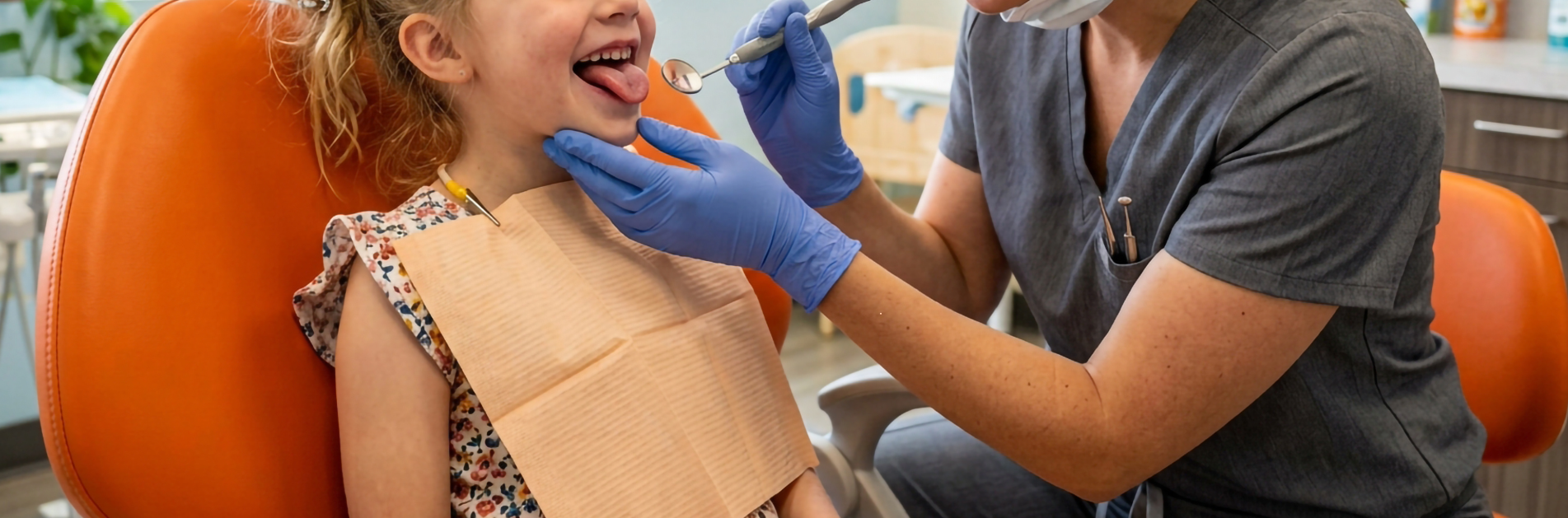
A child’s first experience at the dentist shapes how they feel about oral healthcare for the rest of their life. It also lays the foundation for how their adult teeth, jaws, airway, and overall health will develop. At ROZE BioHealth and BioDental Clinics in Dubai, paediatric dentistry is approached the way it should be: gently, biologically, and with the long view in mind. Every treatment is designed to be minimally invasive, non-toxic, and tailored to the child in front of us, never simply scaled down from adult dentistry.
This guide explains what paediatric dentistry actually involves, what makes a biological approach different, and how the specialist paediatric team at ROZE creates calm, science-led care for children from infancy through adolescence.
What Is Paediatric Dentistry?
Paediatric dentistry is the dental specialty dedicated to the oral health of infants, children, and adolescents, including those with special healthcare needs. A specialist paediatric dentist completes additional postgraduate training beyond general dentistry, focused on child development, behaviour management, growth and occlusion, paediatric pharmacology, and the prevention and management of dental disease in growing patients.
In practical terms, this means a paediatric specialist understands not just teeth, but the whole growing child: how the airway develops, how the jaws are shaped by tongue posture and breathing, how diet and the oral microbiome influence cavities, and how a child’s emotional experience at the dentist affects their long-term oral health behaviour.
Why a Biological Approach to Paediatric Dentistry Matters
Conventional paediatric dentistry has historically leaned heavily on a “drill and fill” model, with frequent use of mercury amalgam, high-dose fluoride protocols, and aggressive restorative work. A biological, or holistic, approach takes a different position. It views every choice through a lens of long-term health, biocompatibility, and the principle of least intervention.
At ROZE, this translates into several core commitments. Treatments are minimally invasive, preserving as much healthy tooth structure as possible. Materials are biocompatible and non-toxic, with no mercury, no BPA, and no unnecessary chemical exposure. Where possible, regenerative and ozone-based therapies are used in place of more aggressive interventions. Prevention is treated as the most important treatment of all, with early monitoring of diet, breathing, oral microbiome, and habits that influence dental and facial development.
This is paediatric dentistry that respects the biology of a developing child, not just the surface of their teeth.
When Should a Child First See the Dentist?
Major paediatric dental bodies, including the American Academy of Pediatric Dentistry, recommend that a child’s first dental visit happen by age one, or within six months of the first tooth erupting. This may feel early, but the first visit is rarely about treatment. It is about prevention, education, and starting a positive relationship with dental care from the very beginning.
A typical first visit at ROZE includes a gentle examination of the mouth, jaws, and bite, an assessment of feeding and breathing patterns, age-appropriate hygiene guidance for parents, and a conversation about diet, snacking, and habits such as thumb sucking or pacifier use.
After the first visit, most children benefit from a check-up every six months, with cleaning and fluoride-free remineralisation options where appropriate.
What Paediatric Dentistry Covers
A specialist paediatric dentist supports a child through several distinct stages of development, each with its own clinical focus.
Infancy and early childhood (0 to 3 years) focuses on monitoring tooth eruption, breastfeeding and bottle-feeding patterns, prevention of early childhood caries, and early identification of airway, tongue, or lip-tie concerns.
Pre-school and primary years (3 to 9 years) centre on cavity prevention, sealants, biological fillings, monitoring of jaw and airway development, and early interceptive orthodontic screening.
Mixed dentition (6 to 12 years) is the phase where baby teeth and adult teeth coexist. This is a critical window for interceptive orthodontics, myofunctional therapy, and habit correction (mouth breathing, tongue thrust, thumb sucking).
Adolescence (12 to 17 years) brings full orthodontic options, restorative care, wisdom tooth assessment, and patient-led oral hygiene education.
Throughout every phase, the paediatric team also manages dental trauma, emergency care, and special needs dentistry, including children who are anxious, neurodiverse, or medically complex.
Biological vs Conventional Paediatric Dentistry: A Clear Comparison
Core Treatments and Services Offered
Paediatric services at ROZE are designed to keep treatment as gentle, conservative, and developmentally supportive as possible. Typical care includes:
- Comprehensive paediatric examinations and risk assessments
- Preventive care: cleanings, sealants, dietary guidance
- Biocompatible, mercury-free fillings
- Ozone therapy for early decay and infection control
- Remineralization protocol where appropriate to arrest decay non-invasively
- The Hall technique for biological management of decayed primary molars
- Paediatric dental trauma management (fractured, displaced, or knocked-out teeth)
- Pulp therapy with biocompatible materials
- Space maintenance after early tooth loss
- Interceptive orthodontic screening and Myobrace-style appliances
- Tongue and lip tie assessment
- Inhalation (nitrous oxide / laughing gas) sedation
- General anaesthesia for complex or special needs cases
- Special needs and behaviour-led dentistry
- Oral surgery for paediatric needs
Behaviour Management and Dental Anxiety in Children
A frightened child rarely heals well, learns nothing positive from the visit, and often grows into a fearful adult patient. A skilled paediatric dentist begins with behaviour, not the drill. Techniques used at ROZE include tell-show-do, distraction, positive reinforcement, voice modulation, and child-led pacing, heavy comfort blanket. When clinically appropriate, inhalation sedation with nitrous oxide offers a safe, calming option for anxious children, allowing treatment to proceed without distress. For complex cases or children with special needs, general anaesthesia under proper medical supervision is available.
Crucially, sedation is treated as a tool, not a default. The aim is always to build a child who can, over time, sit calmly through a dental visit on their own.
The Oral-Systemic Connection in Children
One of the most important shifts in modern paediatric dentistry is the recognition that the mouth is not separate from the rest of the body. In growing children, this connection is especially powerful.
Mouth breathing, for example, is not merely a habit. It can reshape the developing face, narrow the upper arch, contribute to crooked teeth, disturb sleep, and affect attention and behaviour. A tongue tie can affect feeding, speech, and palate development. Chronic inflammation in the gums, even in children, has systemic implications. Frequent snacking and sugary drinks disrupt the oral microbiome long before they cause visible cavities.
A biological paediatric dentist looks for these patterns early, when correcting them is gentle and inexpensive, rather than years later when the consequences are structural.
Meet ROZE’s Specialist Paediatric Dentists in Dubai
At ROZE, paediatric care is led by two highly trained specialist paediatric dentists who share a deep commitment to biological, child-centred dentistry.
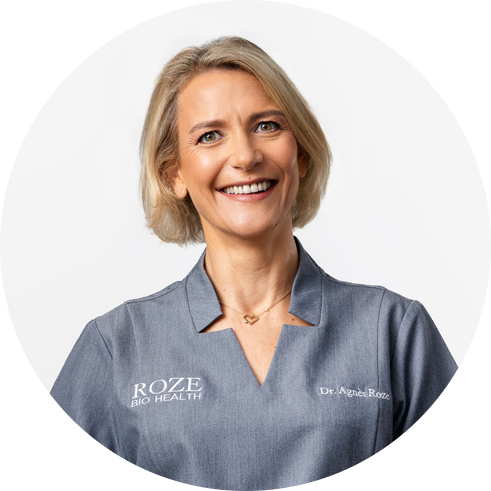
Dr. Agnes Roze, co-founder of the clinics, is a Specialist Paediatric Dentist with a passion for holistic health. Her postgraduate thesis focused on the use of ozone in pediatric dentistry, and she is dedicated to providing non-traumatic care. As a mother of three, she understands parents’ concerns and strives to create a calm, worry-free environment.
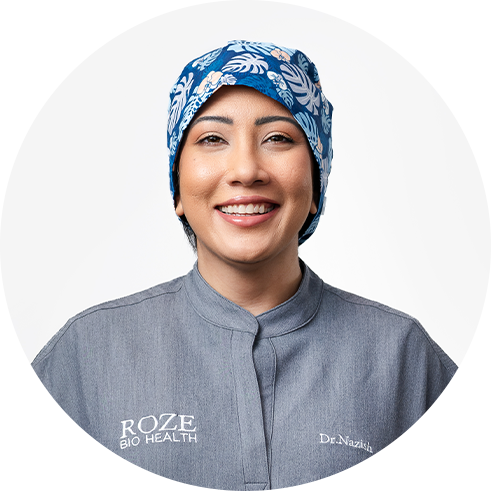
Dr. Nazish Munir is a Specialist in Paediatric Dentistry who holds a prestigious membership from the Royal College of Surgeons Edinburgh.
She is an award-winning clinician known for her expertise in behavior management and inhalation sedation, making dental visits positive for even the most anxious children.
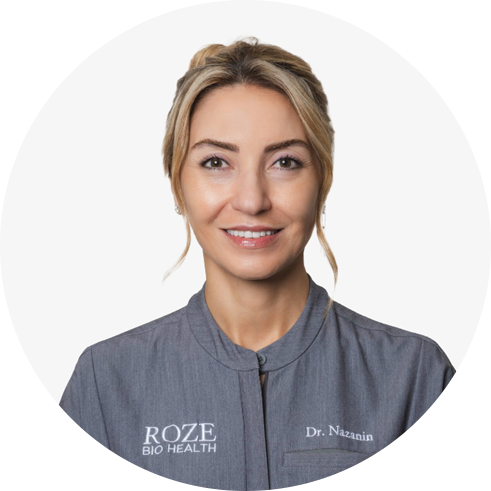
Dr. Nazanin’s areas of expertise include the prevention and treatment of early childhood caries, interceptive orthodontics, Invisalign, Myobrace, and conscious sedation (laughing gas). She also provides dental treatment under general anesthesia and has extensive experience in managing dental trauma, as well as caring for children with special needs and medically compromised patients.
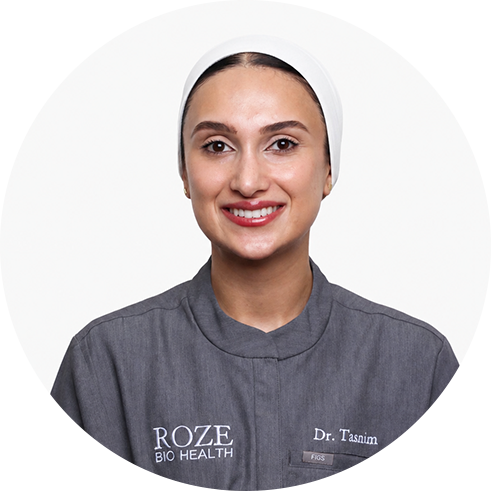
Dr. Tasnim quickly established herself as a compassionate general dentist with a special affinity for treating both adults and children. Her calm and friendly nature helps put even the most anxious patients at ease, transforming dental visits into positive experiences for the entire family.
She is driven by a strong commitment to minimally invasive and preventive dentistry.
A Typical Paediatric Treatment Timeline
Most children benefit from a check-up every six months, with the frequency adjusted based on individual risk.
Paediatric Dental Emergencies: What Parents Should Know
Children fall, collide, and explore. A few quick principles can protect their teeth:
- A knocked-out permanent tooth is a true emergency. Hold it by the crown (never the root), rinse briefly in milk or saline if dirty, attempt to re-insert into the socket if possible, and contact a paediatric dentist immediately.
- A knocked-out baby tooth should never be re-implanted, as this can damage the developing adult tooth beneath.
- For chipped, fractured, or displaced teeth, contact the clinic the same day.
- For lip, cheek, or tongue injuries, apply cold pressure and seek assessment if bleeding is significant.
ROZE provides paediatric dental emergency care, and Dr. Agnès Roze in particular has specialist training in paediatric dental traumatology.
Risks and Considerations
Even within a biological approach, honest expectations matter. A few points worth knowing:
- Children’s behaviour and cooperation vary widely, and forcing treatment can do long-term harm.
- Untreated decay in baby teeth is not “fine because they fall out”; it can cause pain, infection, and damage to permanent teeth developing underneath.
- Prevention is far cheaper, gentler, and more effective than late intervention.
- Diet, sleep, breathing, and screen-time habits all influence oral health more than many parents realise.
A specialist paediatric consultation helps families separate what really matters from what does not.
Paediatric Dentistry in Dubai: Why ROZE
Dubai is home to highly health-literate families who increasingly want their children’s care to be clean, science-led, and respectful of long-term health. ROZE was founded to provide exactly that, with paediatric dentistry as one of its core specialties.
What sets ROZE apart includes specialist paediatric dentists with international training in France, the UK, and the UAE, a biological dentistry framework applied consistently across every age group, mercury-free and biocompatible materials throughout, integration with airway, orthodontic, and functional medicine perspectives, multilingual care (Arabic, English, French), and MOH-approved clinics in Jumeirah, DIFC, and The Greens, with paediatric services delivered at Jumeirah and The Greens.
This is paediatric dentistry built for families who want more than a kid-friendly waiting room; they want clinical depth, biological care, and a long-term partner for their child’s oral health.
A Final Thought
How a child experiences dentistry in the first ten years of their life shapes their relationship with oral health for the next eighty. A gentle, biological approach, led by specialists who understand both children and the science of whole-body health, is one of the most valuable investments a family can make in their child’s future.
If you would like to introduce your child to paediatric dentistry the ROZE way, the team would be glad to welcome you. To book a consultation, contact the ROZE clinical team in Dubai.