

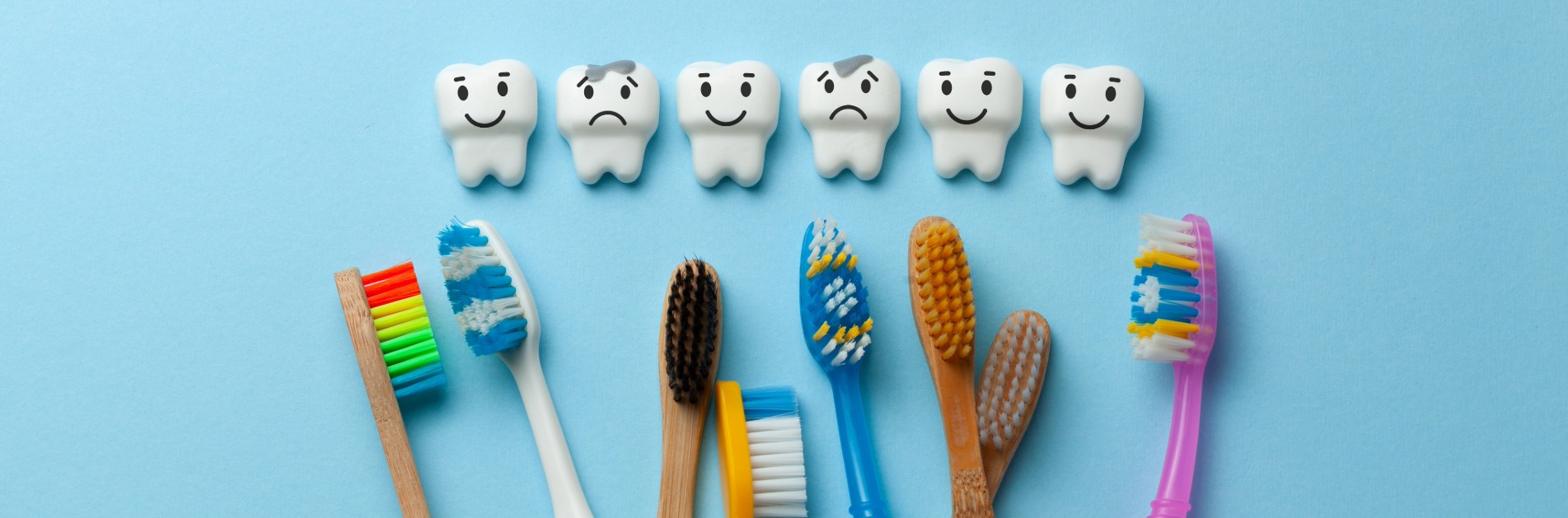
Clinically reviewed by the Paediatric Dentistry team at ROZE BioHealth and BioDental Clinics, Dubai.
The most important dental appointments in a person’s life happen before they turn ten. Not because these are the most complex appointments, but because they shape almost everything that follows. How a child feels about the dentist, how their jaws and airway develop, how their bite settles, how their microbiome balances, and how they eat, breathe, and brush for the next eighty years is quietly decided in the earliest years.
At ROZE BioHealth and BioDental Clinics in Dubai, child oral health is treated as one of the highest-value areas of dentistry we practice. Our approach is gentle, biological, and rooted in prevention. It is delivered by a team that includes two Specialist Paediatric Dentists, an experienced dentist with over 14 years in paediatric care, and a paediatric-focused clinician known for creating calm, positive experiences for children. Together, they support families from a baby’s first tooth through the teenage years, in Arabic, English, French, and Persian, across ROZE’s Jumeirah, DIFC, and The Greens clinics.
This guide is a practical, medically informed look at what early awareness and the right habits actually mean, and how parents in Dubai can give their children the strongest possible foundation for lifelong oral health.
Why the First Decade Matters More Than Most Parents Realise
A child’s mouth is a highly dynamic biological environment. Teeth erupt, jaws grow, muscles pattern themselves around the tongue and lips, breathing habits form, and the microbiome establishes its long-term architecture. The window for shaping how all of this develops is largely closed by adolescence.
Early awareness matters because:
- Baby teeth guide adult teeth into their correct positions.
- Jaw and airway development are strongly influenced by breathing, tongue posture, and diet during childhood.
- Habits formed before age eight (brushing, hydration, chewing, breathing) tend to persist for life.
- Early childhood caries can affect nutrition, speech, sleep, behavior, general health and self-esteem, and can damage the adult teeth developing underneath.
- A child’s first dental experiences shape their comfort and behaviour at the dentist for decades.
This is why the American Academy of Pediatric Dentistry recommends a first dental visit by age one, or within six months of the first tooth erupting. It is not about treatment. It is about prevention and about starting the relationship with dental care on the right foot.
When and How to Start: A Practical Guide by Age
Different ages call for different focuses. The habits that matter for a toddler are not the same as those that matter for a nine-year-old. A summary of what each stage should look like:
| Age Range | Focus at Home | Focus at ROZE |
|---|---|---|
| 0 to 12 months | Wipe gums after feeds, introduce a soft brush at first tooth, breastfeeding and tongue function support. | First dental visit, feeding assessment, tongue tie check, breathing pattern, oral hygiene habits and nutrition. |
| 1 to 3 years | Twice daily brushing with a rice-grain-sized smear of appropriate toothpaste, no bottles at night, water instead of juice. | Cavity prevention, habit guidance and parental education. |
| 3 to 6 years | Supervised brushing twice a day, introduce flossing, sugar limits and encourage nasal breathing. | Sealants where appropriate, dietary guidance, early arch and airway assessment. |
| 6 to 9 years | Independent brushing with supervision, introduce interdental cleaning and focus on healthy chewing. | Interceptive orthodontic screening, myofunctional habits, breathing pattern, prevention and minimally invasive dentistry. |
| 9 to 12 years | Full independence with reminders, mouthguards for sports and orthodontic monitoring. | Mixed dentition management and early orthodontic correction if needed. |
| 12 to 17 years | Ownership of oral hygiene, orthodontic follow-through, mindful eating and hydration. | Comprehensive orthodontics, restorative care and adolescent-focused education. |
The Habits That Shape a Lifetime
Early awareness is not complicated. It is a small number of habits, done consistently.
Brushing
Start brushing the moment the first tooth erupts, using a soft infant brush. Twice a day, morning and night. Supervise brushing until the child is at least seven or eight years old, because manual dexterity is not fully developed before then. Use age-appropriate amounts of toothpaste (a smear for under 3s, a pea-sized amount for 3 to 6).
Toothpaste Choice
At ROZE, we support families in making informed toothpaste choices for their children. For parents choosing a biological, biocompatible option, hydroxyapatite toothpaste is often preferred: the same mineral that makes up natural enamel, non-toxic if swallowed, and suitable across all ages. This is why ROZE BioHealth’s own hydroxyapatite formulation was developed with children and families in mind.
Flossing
Introduce flossing as soon as any two teeth touch. Small children need help; older children can be taught, gradually and patiently. Interdental brushes may be useful in some cases.
Diet
Sugar frequency matters more than sugar quantity. A single dessert is less damaging than snacking on carbohydrates all day. Emphasise whole foods, protein, healthy fats, vegetables, dairy or dairy alternatives, and whole grains. Prioritise nutrients that build teeth: calcium, phosphorus, magnesium, vitamin D, vitamin K2, and adequate protein.
Hydration
Water is the best drink for teeth. Juice, sweetened milks, and flavoured drinks should be occasional, not routine. Encourage sipping water throughout the day.
Breathing
Nasal breathing is essential for healthy oral, facial, and airway development. Chronic mouth breathing is not a habit to ignore. It reshapes the developing face, narrows the upper arch, contributes to crooked teeth, disturbs sleep, and affects attention and behaviour. Any child who consistently sleeps or rests with their mouth open should be assessed.
Sleep
A child who does not sleep well cannot heal, focus, or grow well. Poor sleep is often linked to airway and breathing issues, both of which have oral and dental dimensions.
The First Dental Visit
By age one. This alone changes the trajectory of many children’s oral health.
Common Early Challenges and How to Address Them
Almost every family encounters at least one of these, and each is easier to address early than late.
Early childhood caries (baby bottle decay). Often caused by prolonged bottle feeding, especially at night, or frequent sipping of milk or sweetened drinks. Prevention is straightforward: no bottles at night after teeth erupt, wipe or brush gums and teeth after feeds, and see the dentist early.
Thumb sucking and pacifier use. Normal in infancy. Concerns arise if they persist beyond age three or four, when they can influence jaw shape, palate development, and bite. Gentle, non-punitive transition strategies work best.
Mouth breathing and tongue-tie. Both are commonly overlooked and both have measurable effects on facial growth, airway function, and dental alignment. They deserve evaluation.
Dental anxiety. A child who is afraid at the dentist rarely learns anything positive from the visit. This is why behaviour management, patience, and child-led pacing are as important as any clinical technique.
Dental trauma. Falls and collisions are common. A knocked-out permanent tooth is a true emergency. Hold it by the crown, rinse briefly in milk or saline if dirty, attempt to re-insert into the socket if possible, and contact us immediately. A knocked-out baby tooth should never be re-implanted, as this can damage the developing adult tooth underneath.
Sensory or special needs. Children with sensory sensitivities, neurodiversity, or medical complexity need a paediatric dental team trained to work with them. ROZE has that capability.
The Biological Difference in Paediatric Care
Conventional paediatric dentistry has traditionally leaned on aggressive restoration and heavy fluoride reliance. A biological approach takes a different position. It views every choice through a lens of long-term health, biocompatibility, and the principle of least intervention.
At ROZE, this means treatments are minimally invasive, materials are biocompatible and non-toxic (no mercury, no BPA), regenerative and ozone-based therapies are used where possible, and prevention is treated as the most important treatment of all. It also means airway, tongue posture, breathing, and diet are routinely evaluated as part of a child’s oral health, not treated as separate issues. The mouth-body connexion is assessed to make sure oral and gut microbiome are balanced and no hidden infection or inflammation are impacting the overall health.
Interceptive Orthodontics: Why Early Screening Matters
Orthodontic screening should begin around age six or seven, not at fourteen. Early identification of crowding, crossbite, deep bite, narrow arches, or airway issues opens the door to gentle, interceptive treatment such as Myobrace-style appliances or Invisalign First. This is far easier and often more effective than waiting until adolescence. Several members of the ROZE paediatric-focused team have specific expertise in interceptive orthodontics, and screening is a standard part of routine paediatric visits.
Meet the ROZE Paediatric Dentistry Team
Child oral health at ROZE is delivered by a coordinated team that brings together international training, deep clinical experience, and a shared commitment to gentle, biological care.

Dr. Agnès Roze, Specialist Paediatric Dentist and Co-founder of ROZE BioHealth and BioDental Clinics
Dr. Agnès Roze is one of the founding voices of biological paediatric dentistry in Dubai. She trained at Rennes University of Dentistry in France, served as an assistant teaching professor in Pedodontic and Preventive Dentistry in Lille, and completed her postgraduate degree in Clinical and Surgical Pediatric Dentistry in Marseille, with a master’s thesis focused specifically on the use of ozone in pediatric dentistry. Her clinical expertise spans biodentistry, preventive care, minimally invasive treatment, paediatric oral surgery and traumatology, emergency care, special needs dentistry, and nitrous oxide sedation. She practices at ROZE Jumeirah in French and English, and brings a mother-of-three perspective to every appointment.
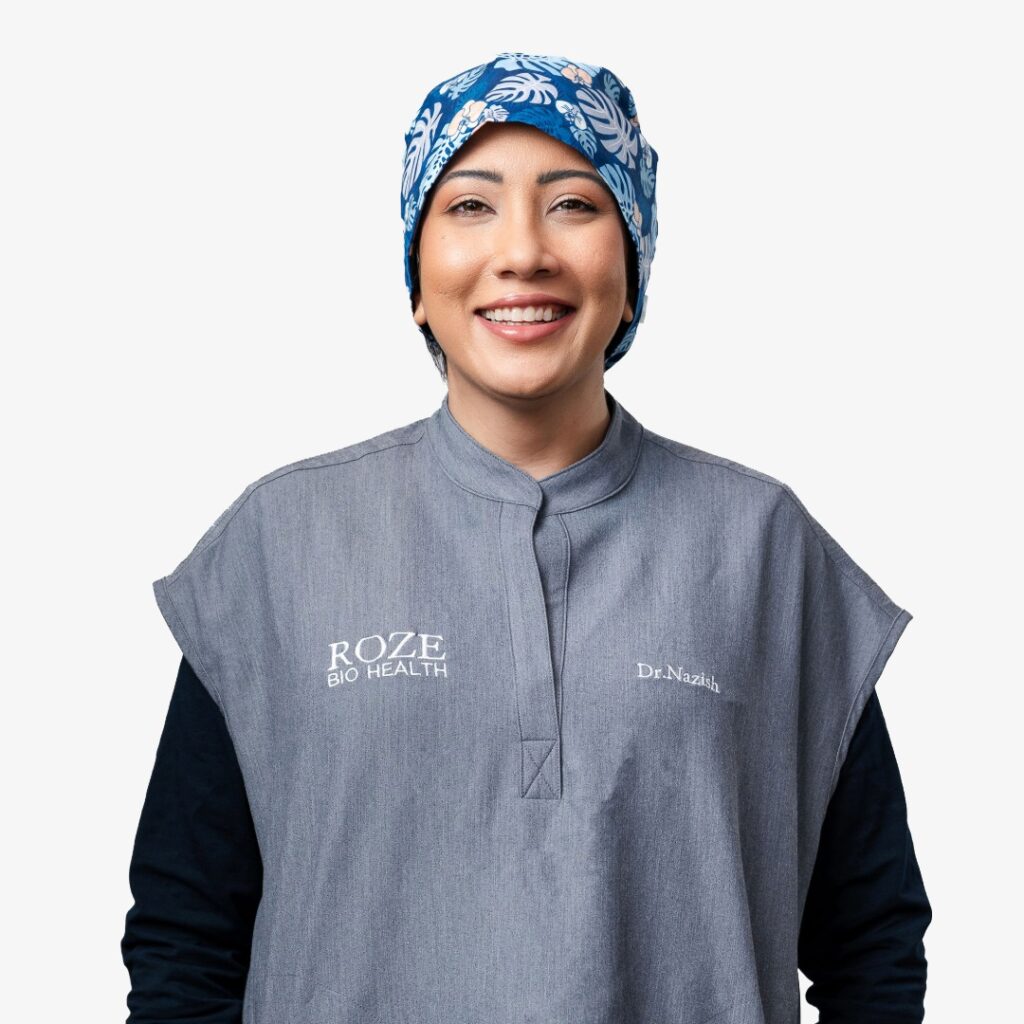
Dr. Nazish Munir, Specialist Paediatric Dentist (Jumeirah)
Dr. Nazish Munir was born and raised in the UAE. She graduated from Ajman University in 2013, then completed the three-year Doctor of Clinical Dentistry program in Paediatric Dentistry at the University of Edinburgh, where she received the prestigious Nairn Wilson Award for Clinical Excellence and later earned the Membership in Paediatric Dentistry diploma from the Royal College of Surgeons of Edinburgh. Her focus is on preventive and conservative dentistry, biodentistry, behaviour management, inhalation sedation, general anesthesia and paediatric dental trauma. She practices at ROZE Jumeirah in Arabic and English.
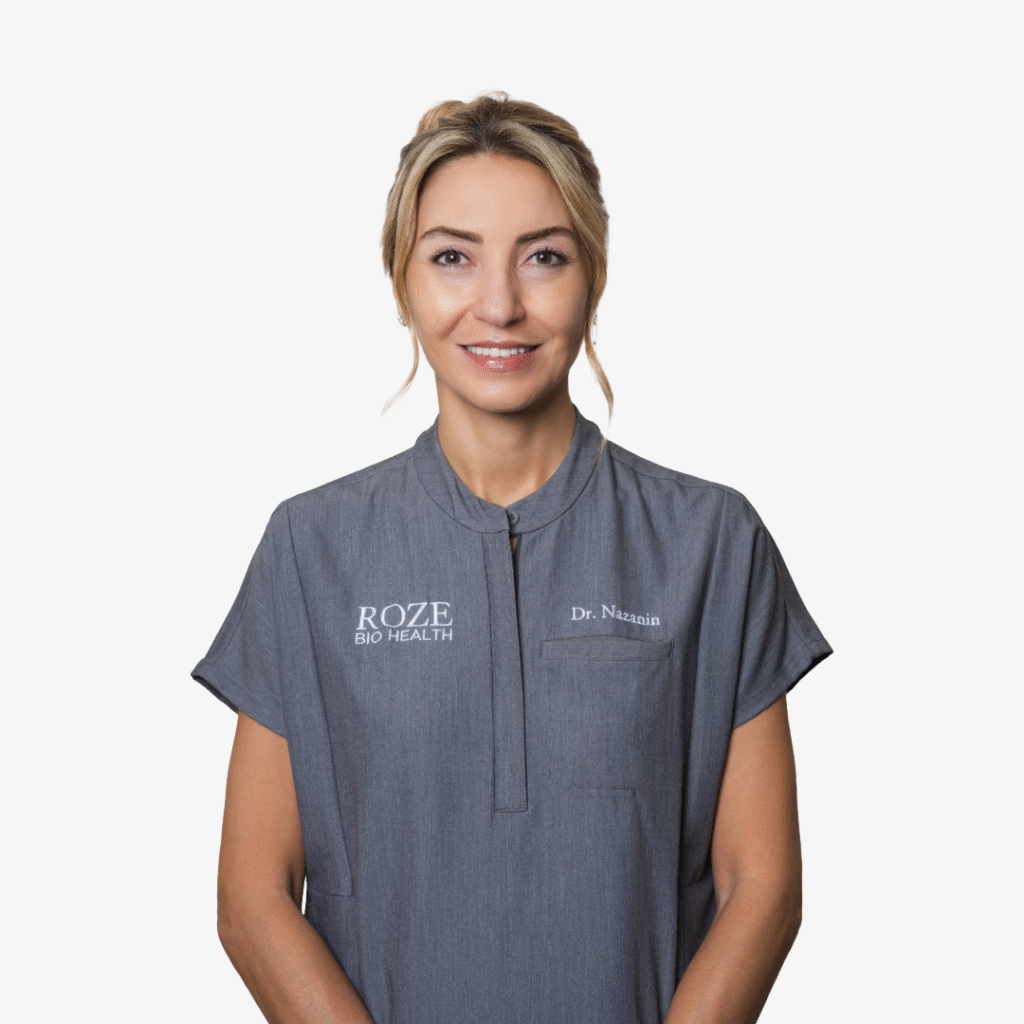
Dr. Nazanin Hashemi, Dentist with 14+ Years of Paediatric Experience and Conscious Sedation Certification (The Greens)
Dr. Nazanin Hashemi brings over 14 years of dedicated paediatric experience. She graduated from Melli University in Tehran, earning her certificate in Paediatric Dentistry and Master in Dental Science in 2007, and further specialised in Conscious Sedation at UBC Dental School in Vancouver, Canada. She is a proud member of the American Academy of Pediatric Dentistry (AAPD), the Canadian Academy of Pediatric Dentistry (CAPD), and the International Association of Pediatric Dentistry (IAPD). Her expertise spans early childhood caries prevention and treatment, interceptive orthodontics, Invisalign, Myobrace, conscious sedation (laughing gas), dental trauma, and care for children with special needs and medically compromised patients. She uses cutting-edge technologies such as Single Tooth Anesthesia, QuickSleeper, and Laser, alongside biocompatible approaches, to keep every visit as comfortable and effective as possible. She practices at ROZE The Greens in Persian and English, with conversational French.
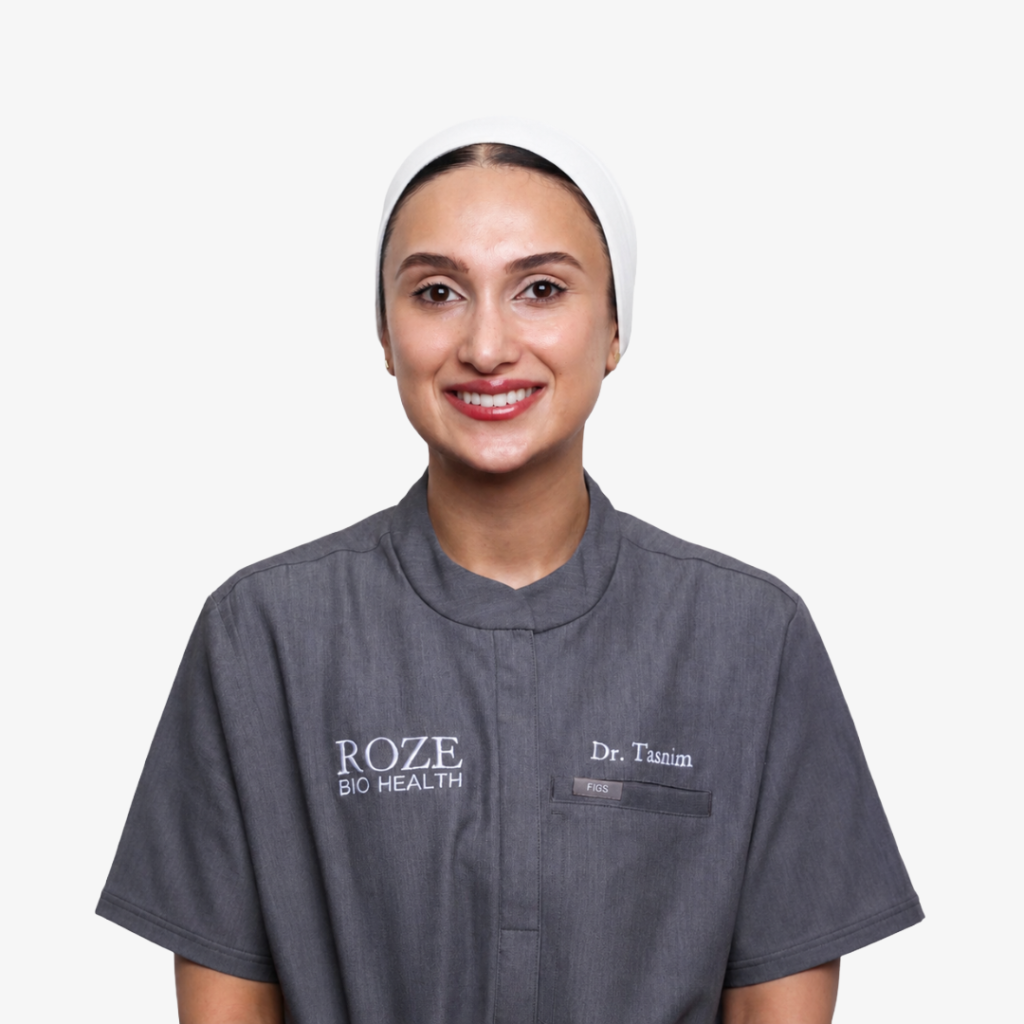
Dr. Tasnim El Masri, Dentist with Paediatric Focus and Preventive Philosophy (Jumeirah / DIFC)
Dr. Tasnim El Masri earned her Bachelor of Oral and Dental Surgery from Beirut Arab University in Lebanon in 2019, and later obtained a Diploma in Paediatric Dentistry to strengthen her care for younger patients. Her clinical focus centres on preventive and minimally invasive dentistry, oral health education and early intervention, customised treatment plans, and nitrous oxide sedation for stress-free dental visits. Known for her calm, gentle approach with anxious patients of all ages, she is especially valued by families who want a warm, patient-led experience for their children. She practices at ROZE Jumeirah and DIFC in Arabic and English.
Together, this team gives Dubai families access to specialist and paediatric-focused clinicians across four languages and three clinic locations, all delivering care within a biological, minimally invasive framework.
Conventional vs Biological Paediatric Care: A Clear Comparison
| Aspect | Conventional Paediatric Care | Biological Paediatric Care at ROZE |
|---|---|---|
| Philosophy | React to problems as they appear | Prevent, preserve, and address root causes |
| Filling materials | May include mercury amalgam | Mercury-free, BPA-aware, biocompatible |
| Fluoride approach | High-dose, routine | Considered, minimal, with alternatives like hydroxyapatite |
| Cavity management | Drill and fill | Ozone, guided remineralization with peptides, laser therapy, minimally invasive options |
| Airway and breathing | Rarely assessed | Routinely evaluated |
| Orthodontic timing | Often delayed to teens | Screening from age 6 to 7 |
| Sedation | Often the default for anxiety | Behaviour management first, sedation only where needed |
| Whole-body view | Mouth treated in isolation | Mouth treated as part of child health |
Child Oral Health in Dubai: Why It Matters Here
Dubai’s families are health-literate, wellness-driven, and increasingly informed. Parents want more than a kid-friendly waiting room. They want clinicians who understand airway and breathing, who avoid unnecessary chemicals, who work biologically, who speak their language, and who treat their children with genuine warmth and skill.
That is exactly why ROZE built its paediatric offering the way it has: with two Specialist Paediatric Dentists, two additional highly capable paediatric-focused clinicians, four working languages, three locations, and a consistent biological, minimally invasive framework that applies from a baby’s first appointment to a teenager’s Invisalign case.
Risks and Considerations
Honest expectations serve every child well:
- Untreated decay in baby teeth is not “fine because they fall out.” It can cause pain, infection, and damage to the permanent teeth developing underneath.
- Cooperation varies. Forcing treatment on a scared child can do long-term harm. A skilled paediatric team knows how and when to pause.
- Sleep, diet, breathing, and screen time influence oral health more than many parents realize.
- Sedation is a valuable tool when used appropriately, but never a substitute for genuine behavior management.
- Prevention is far cheaper, gentler, and more effective than late intervention. This is where investment should sit.
Frequently Asked Questions
At what age should my child first visit the dentist?
By their first birthday, or within six months of their first tooth erupting. The visit focuses on prevention, parental education, and helping the child feel comfortable.
How often should children visit the dentist?
Every six months is standard. Children with higher decay or airway risk may benefit from more frequent visits.
Is paediatric dentistry at ROZE mercury-free?
Yes. ROZE follows a strict biological dentistry protocol. No mercury amalgam fillings are used, and material choices prioritise biocompatibility.
Do you use fluoride on children?
ROZE takes a considered, minimal approach to fluoride and offers alternatives such as hydroxyapatite where appropriate. Your child’s dentist will discuss what is right for their specific risk profile.
Is laughing gas (nitrous oxide) safe for children?
Inhalation sedation with nitrous oxide is one of the safest, most reversible forms of sedation available in paediatric dentistry, and is used routinely when behaviour management alone is not enough.
Can ROZE treat children with special needs?
Yes. Several members of the ROZE paediatric team have direct experience with special needs and medically compromised children, with options ranging from behaviour-led care to inhalation sedation and, where required, general anaesthesia in appropriate settings.
What should I do if my child knocks out a permanent tooth?
Hold it by the crown, rinse briefly in milk or saline if dirty, attempt to re-insert, and contact us immediately. Time is critical. Never re-implant a baby tooth.
Do you assess my child’s breathing and airway?
Yes. Mouth breathing, tongue posture, and airway development are routinely screened, because they significantly influence facial growth, sleep, and the position of adult teeth.
Do you offer interceptive orthodontics for young children?
Yes. Early screening typically begins around age 6 to 7. When indicated, interceptive treatments such as Myobrace-style appliances or Invisalign First may be recommended.
Where in Dubai are the ROZE paediatric dentists based?
Dr. Agnès Roze practices at Jumeirah. Dr. Nazish Munir at Jumeirah. Dr. Nazanin Hashemi at The Greens. Dr. Tasnim El Masri at The Greens and DIFC.
A Final Thought
The habits and experiences of the first ten years of a child’s dental life shape the next eighty. Early awareness is not about doing more. It is about doing the right things, gently, consistently, and within a clinical environment that respects your child’s biology and personality.
If you would like to introduce your child to paediatric dentistry the ROZE way, the team would be glad to welcome you. To book with Dr. Agnès Roze, Dr. Nazish Munir, Dr. Nazanin Hashemi, or Dr. Tasnim El Masri, contact the ROZE clinical team in Dubai.