

Clinically reviewed by the BioDental and BioHealth teams at ROZE BioHealth and BioDental Clinics, Dubai.
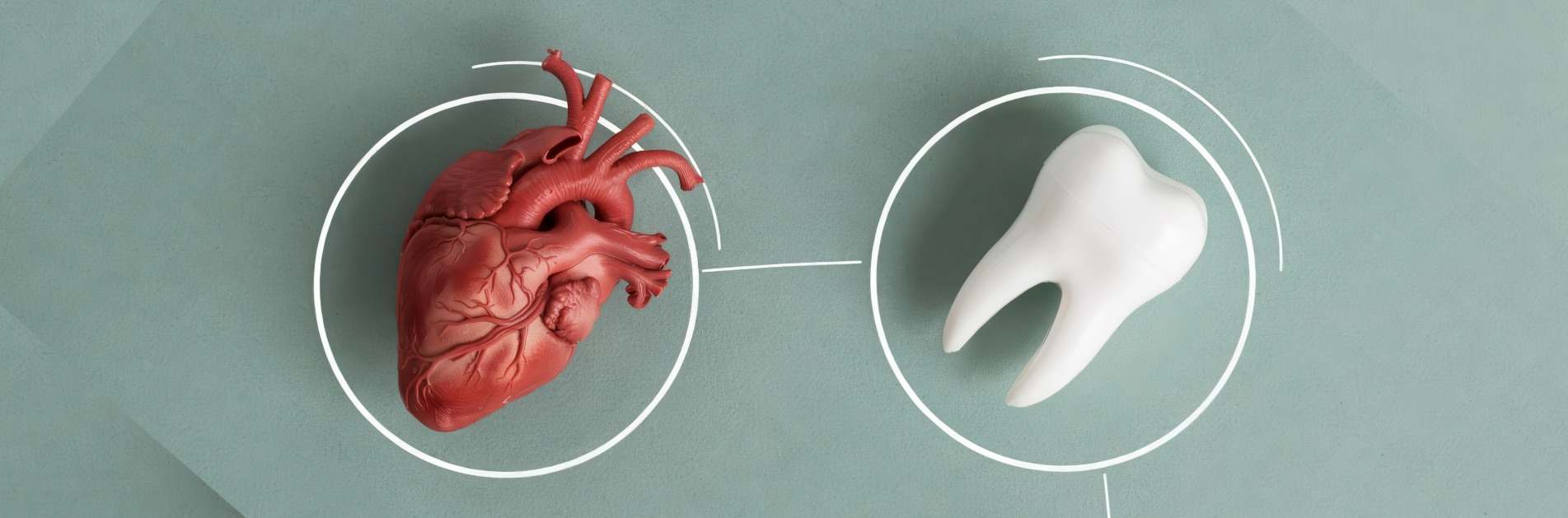
Cardiovascular disease is the leading cause of death worldwide. It accounts for roughly a third of all deaths, and much of the public conversation about preventing it focuses on the same familiar territory: cholesterol, blood pressure, smoking, exercise, diet, and stress. All important. All widely discussed. What is far less discussed, despite an increasingly compelling body of peer-reviewed research, is that one of the most consistent and modifiable risk factors for cardiovascular disease may be sitting in your gums.
At ROZE BioHealth and BioDental Clinics in Dubai, we treat the mouth-heart connection as one of the most under-recognised yet highest-value conversations in preventive medicine. This guide walks through what the current science actually shows, why the connection exists, who is most at risk, and what a biological, integrated approach looks like in practice.
The Short Answer
Yes, current peer-reviewed research shows a strong and consistent association between gum disease (periodontitis) and cardiovascular disease. Multiple meta-analyses have demonstrated increased risk of coronary heart disease, heart attack, stroke, and peripheral arterial disease in patients with periodontitis. The underlying mechanism is now well characterised: chronic oral inflammation drives systemic inflammation, oral bacteria such as Porphyromonas gingivalis have been isolated from atherosclerotic plaques in human arteries, and treating gum disease measurably reduces cardiovascular risk biomarkers.
In other words, the mouth is not separate from the heart. It is upstream of it.
What “Gum Disease” Actually Means
Gum disease is not one condition. It is a spectrum:
Gingivitis is the earliest stage. Gums are red, swollen, and bleed when brushed or flossed. It is reversible with proper care.
Periodontitis is the deeper, chronic form. Inflammation extends beyond the gums into the bone and ligaments that hold teeth in place. Pockets form. Bone is quietly destroyed. Teeth can loosen over time. Approximately 20 to 50 percent of the global population is affected, and severe periodontitis alone affects around 10.8 percent of adults worldwide, making it the sixth most common disease on the planet.
The vast majority of periodontitis is painless in its early and middle stages. That is exactly why so many patients do not realise they have it, and why it drives disease elsewhere in the body without ever announcing itself.
What the Peer-Reviewed Research Actually Shows
The gum-heart association is no longer a hypothesis. It is one of the most consistently reproduced findings in modern cardiology and periodontology research. A brief tour of the evidence:
Meta-analyses show a clear elevated cardiovascular risk. A 2023 meta-analysis in Frontiers in Cardiovascular Medicine concluded that periodontal disease is strongly associated with an increased risk of coronary heart disease, myocardial infarction, and cardiovascular disease overall. Systemic inflammation is described as the core mechanism.
Longitudinal cohort data adjusted for traditional risk factors. A 24-month prospective study of 1,400 participants produced hazard ratios of 1.1 to 2.0 for cardiovascular disease in patients with periodontitis, even after adjusting for age, smoking, obesity, hypertension, diabetes, and lipid profile. In simple terms: the effect holds up even after accounting for the classical risk factors.
Patients with periodontitis show 1.27-fold higher prevalence of atherosclerosis compared with individuals without periodontitis, according to epidemiological data cited in a 2025 study published in Signal Transduction and Targeted Therapy.
Oral bacteria are physically present in atherosclerotic arteries. This is one of the more sobering pieces of the puzzle. Porphyromonas gingivalis, the keystone bacterium in chronic gum disease, has been detected in:
- Human atherosclerotic plaques dissected from carotid and coronary arteries
- Aortic aneurysm tissue and aortic thrombi
- Coronary and femoral artery tissue in patients undergoing bypass surgery
- Thrombus specimens from patients with acute myocardial infarction
A study by Rangé and colleagues identified P. gingivalis as the most abundant bacterial species detected in coronary and femoral artery tissues from atherosclerosis patients. Live bacteria, not just DNA fragments, have been retrieved from atherosclerotic plaque in earlier work by Kozarov and colleagues. This is not spectator biology. The bacteria are physically inside the artery walls.
The bacteria appear to destabilise plaques. A 2025 study published in Signal Transduction and Targeted Therapy demonstrated that P. gingivalis positive clusters correlated with the ratio of necrotic core to total plaque area in human samples, an accepted marker of plaque instability. In animal models, P. gingivalis accelerated plaque necrosis, oxidative stress, and macrophage cell death. Plaque rupture is the biological event that triggers most heart attacks. Anything that destabilises plaques matters.
Periodontal treatment reduces cardiovascular risk biomarkers. A 2018 systematic review of clinical trials found that periodontal treatment reduced C-reactive protein (CRP) levels in 77.8 percent of trials, tumor necrosis factor-alpha in 66.7 percent, interleukin-6 in 100 percent, leukocytes in 50 percent, and improved fibrinogen levels in 66.7 percent. These are the same inflammatory markers cardiologists track when they assess long-term cardiovascular risk.
Mortality data reinforces the pattern. The 2023 Study of Health in Pomerania (SHIP-START), a prospective cohort of 3,047 participants followed for 13 years, found that periodontitis and low-grade systemic inflammation were independent and interacting risk factors for both all-cause and cardiovascular mortality.
Individual studies vary. Not every trial has shown reduction in hard end-points like heart attacks and strokes. But the collective weight of the evidence points in a consistent direction: chronic gum inflammation is a genuine, modifiable, systemic driver of cardiovascular risk.
The Three Main Pathways From Gums to Heart
Understanding why the gums influence the heart makes the connection concrete rather than abstract.
1. Chronic systemic inflammation
Every day, inflamed periodontal tissue releases a cascade of inflammatory mediators (interleukin-1 beta, interleukin-6, tumor necrosis factor-alpha, and C-reactive protein) into the bloodstream. These are the same signalling molecules cardiologists now recognise as central to atherosclerosis. Recent large clinical trials have shown that anti-inflammatory drugs can reduce cardiovascular events in patients with atherosclerosis. Inflammation, in other words, is not a passive marker. It is a mechanism.
2. Direct bacterial dissemination
Oral bacteria enter the bloodstream during chewing, brushing, flossing, and dental procedures, particularly when gum tissue is inflamed. This is called bacteraemia, and it is far more common in patients with active periodontitis. Once in circulation, Porphyromonas gingivalis and other periodontal bacteria can invade endothelial cells lining the arteries, embed in atherosclerotic plaque, and continue producing their virulence factors from within the vessel wall itself.
3. Immune dysregulation and endothelial damage
P. gingivalis infection has been shown to reduce regulatory T cells (Tregs) in atherosclerosis patients, altering the immune response in ways that may accelerate disease. The bacterium and its byproducts also promote LDL oxidation, endothelial dysfunction, foam cell formation, and vascular smooth muscle proliferation, all of which are central processes in atherosclerosis.
These three pathways do not operate in isolation. They compound.
The Hidden Link Between Gum Disease and High Blood Pressure
High blood pressure is one of the most prevalent and most under-recognised cardiovascular connections to gum disease. Hypertension affects roughly one in three adults worldwide, often silently, and it is the single largest modifiable risk factor for stroke, heart attack, and vascular dementia. The evidence that periodontitis quietly contributes to it is now substantial.
A landmark 2021 study published in Hypertension, an American Heart Association journal (Muñoz Aguilera and colleagues, UCL Eastman Dental Institute), examined 500 otherwise healthy adults and found that those with severe periodontitis were approximately twice as likely to have systolic blood pressure ≥140 mmHg compared to adults with healthy gums. Nearly 50 percent of the participants with gum disease unknowingly met the criteria for hypertension, independent of traditional cardiovascular risk factors.
Updated research continues to reinforce this. A 2026 systematic review and meta-analysis in the Journal of Clinical Medicine found a consistent association between periodontitis and hypertension across 11 observational studies (OR 1.65, 95% CI 1.42 to 1.93). A separate 2026 study in the Journal of Clinical Periodontology further showed that severe periodontitis is also linked to poorer blood pressure control in patients already being treated for hypertension. The gum-blood pressure story is therefore not only about who develops hypertension, but also about how well it responds to treatment once diagnosed.
The mechanisms overlap closely with the broader gum-heart story: chronic systemic inflammation damaging the vascular endothelium, elevated hsCRP and IL-6 interfering with nitric oxide signalling, oral bacteria entering the bloodstream, and oxidative stress accelerating vascular ageing.
The clinical takeaway is simple. Dental visits are an opportunity for blood pressure screening, and medical visits are an opportunity for a periodontal review. At ROZE, Dr. Yslème Delhoum, our DHA-licensed Specialist Family Medicine clinician at the DIFC clinic, works at exactly this intersection, combining conventional Family Medicine with an integrative, whole-person approach that reads oral and cardiovascular findings together.
Warning Signs of Gum Disease That Patients Often Ignore
Because periodontitis is largely painless, most patients dismiss the earliest signals. The most important ones:
- Bleeding when brushing or flossing (this is not “normal”)
- Persistent bad breath that does not clear with brushing
- Red, swollen, or tender gums
- Gums that appear to be receding, or teeth that look “longer”
- Sensitivity along the gumline
- A metallic or bitter taste in the mouth
- Loose or shifting teeth
- Pockets or spaces developing between teeth and gums
If any of these are present, the mouth is inflamed. And if the mouth is inflamed, so is the cardiovascular system.
Who Is at Highest Risk
Gum disease and cardiovascular risk overlap in the same populations, which is one of the reasons the connection took so long to be recognised. The highest-risk profiles include:
- Smokers and former smokers
- People with diabetes or pre-diabetes
- Those with a family history of cardiovascular disease
- Patients with metabolic syndrome, obesity, or dyslipidaemia
- People with chronic stress and disrupted sleep
- Those with poor oral hygiene or long gaps between dental visits
- Patients with existing periodontal disease, especially untreated
- Anyone with dry mouth conditions or medications that reduce saliva
- Older adults, where prevalence of both conditions rises together
- People with genetic predisposition to inflammation
These are exactly the patients whose cardiovascular risk deserves a serious mouth-based assessment.
Can Treating Gum Disease Reduce Heart Disease Risk?
The most honest answer: the evidence strongly supports biomarker improvement, and increasingly supports better long-term cardiovascular outcomes. Periodontal treatment consistently reduces the inflammatory markers that drive atherosclerosis. Endothelial function has been shown to improve in patients receiving intensive periodontal therapy. Cohort data continues to strengthen the argument that mouth care is heart care.
This is not marketing language. It is what the peer-reviewed literature currently says. The remaining uncertainty is about the magnitude and consistency of hard-endpoint reduction (fewer heart attacks, fewer strokes), which is genuinely difficult to prove in large trials. What is clear is that treating gum disease reduces the biological pressure the heart is under. That alone is worth doing.
What ROZE Does Differently
For patients concerned about their gum-heart connection, ROZE’s approach is designed around it. A typical pathway includes:
- Comprehensive biological periodontal assessment, including probing, imaging, and evaluation of oral microbiome imbalance
- Ozone therapy to gently disinfect periodontal pockets and calm inflammation without antibiotics
- PRF (platelet-rich fibrin) supported healing in more complex periodontal cases, using the patient’s own blood-derived growth factors
- Metal-free, biocompatible restorations to eliminate ongoing inflammatory triggers from older dental work
- SMART amalgam removal for patients reducing lifelong heavy metal exposure
- Ceramic implants as the biological standard for patients requiring implants
- Integrated functional medicine, functional nutrition, and Family Medicine input through Dr. Priyanka Sainani, Dr. Sindy Yambo, and Dr. Yslème Delhoum to address inflammation, gut health, hydration, blood pressure, and cardiovascular risk factors systemically.
- Biological physiotherapy with Sandra Serrano to support lymphatic drainage, vagus nerve regulation, and inflammation control
- Preventive oral care guidance, including hydroxyapatite-based products and microbiome-supportive habits
This is what a truly integrated mouth-heart plan looks like. It is not one procedure. It is a coherent, long-term strategy.
Practical Actions Patients Can Take Today
Small, consistent changes matter more than dramatic ones:
- Do not ignore bleeding gums. Bleeding is inflammation. Inflammation is systemic.
- Book a comprehensive periodontal assessment, not just a routine cleaning, especially if you have any cardiovascular risk factors.
- Brush twice daily with a soft brush, gently, along the gumline. Consider a hydroxyapatite toothpaste to support enamel and reduce sensitivity.
- Floss daily. This is not optional. Interdental brushes and water flossers can help where regular floss falls short.
- Reduce refined sugar and processed carbohydrates, which fuel inflammation both locally and systemically.
- Address diabetes and blood sugar control. The gum-diabetes-heart axis is deeply interconnected.
- Stop smoking. Nothing accelerates gum disease and cardiovascular disease more consistently.
- Prioritise omega-3 rich foods and anti-inflammatory nutrition.
- Sleep, hydration, and stress management matter more than most patients realise.
- See your dentist every six months, or more often if you have active gum disease or high cardiovascular risk.
- Talk to your dentist about your cardiovascular history, and to your cardiologist about your gum health. Both conversations are quietly incomplete without the other.
- Have your blood pressure checked regularly, especially if you have gum disease. The gum-blood pressure link is now well-documented, and nearly half of adults with periodontitis in published research were unknowingly hypertensive.
Why This Matters in Dubai
Dubai’s population combines high rates of cardiovascular risk factors (metabolic syndrome, sedentary lifestyle in an intense climate, sleep disruption, chronic stress) with a strong appetite for preventive, science-led healthcare. This is exactly the context where the mouth-heart conversation is most relevant, and most under-served.
At ROZE, patients often arrive for cosmetic dental work or a routine check-up and leave with a much broader understanding of what their gums have been quietly signalling. That is the level of clinical integration this issue actually requires.
Risks and Considerations
Honest expectations matter:
- Association is not the same as direct causation. Not every patient with gum disease will develop heart disease, and not every heart attack is driven by gum inflammation. What is clear is that periodontitis raises the biological pressure on the cardiovascular system.
- Treating gum disease does not replace conventional cardiovascular care. Blood pressure, lipids, blood sugar, weight, smoking cessation, and cardiology follow-up all remain central.
- Not all periodontal treatments are equally biological. Aggressive antibiotic protocols may temporarily reduce bacteria but often disrupt the wider oral and gut microbiome.
- Reversing gum disease takes time and consistency. Meaningful biomarker changes typically unfold over weeks to months.
- Preventive assessment is the highest-value intervention. Catching periodontitis in its early stages is far cheaper, gentler, and more effective than managing its systemic consequences later.
Frequently Asked Questions
Does gum disease really cause heart disease?
Gum disease is a strong, consistent, and biologically supported risk factor for cardiovascular disease. It is not the single cause of heart disease, but it contributes to the inflammatory and bacterial burden the cardiovascular system carries.
How exactly do gums affect the heart?
Through three main pathways: chronic systemic inflammation, direct entry of oral bacteria into the bloodstream and arterial walls, and immune dysregulation that promotes atherosclerosis.
Are the bacteria really found in heart arteries?
Yes. Multiple peer-reviewed studies have detected Porphyromonas gingivalis DNA and, in some cases, live bacteria in carotid, coronary, femoral, and aortic tissue, and in thrombus specimens from patients with acute heart attacks.
Does treating my gums reduce my heart disease risk?
Periodontal treatment consistently reduces cardiovascular inflammatory markers such as CRP, IL-6, and TNF-alpha, and improves endothelial function. It is a legitimate, evidence-supported part of a broader cardiovascular prevention strategy.
What are the earliest signs of gum disease?
Bleeding when brushing or flossing, persistent bad breath, red or swollen gums, gum recession, and sensitivity along the gumline. Most early periodontitis is not painful.
Should I be worried if my gums bleed occasionally?
Yes, at least enough to have it evaluated. Bleeding is inflammation, and inflammation is systemic.
Is gum disease treatment the same everywhere?
No. Conventional care focuses on mechanical cleaning and sometimes antibiotics. Biological care at ROZE also uses ozone therapy, PRF, microbiome-supportive strategies, and functional medicine input to address the whole-body picture.
Can hydroxyapatite toothpaste help protect my gums and my heart?
Hydroxyapatite toothpaste supports enamel remineralisation and gentle daily care. In a broader biological framework, healthier daily oral care contributes to reduced inflammation, which in turn supports cardiovascular health.
How often should I have my gums assessed?
Every six months as a baseline. Every three to four months if you have active periodontitis, diabetes, cardiovascular risk factors, or a history of gum disease.
Can gum disease really raise my blood pressure?
Yes, according to multiple peer-reviewed studies. A landmark 2021 study in the American Heart Association journal Hypertension found that adults with severe periodontitis were twice as likely to have high systolic blood pressure compared to those with healthy gums, independent of other risk factors. Updated 2026 systematic reviews and meta-analyses continue to strengthen this association. Severe gum disease has also been linked to poorer blood pressure control in patients already being treated for hypertension.
Where in Dubai can I get a biological gum and cardiovascular-conscious assessment?
ROZE operates MOH-approved clinics in Jumeirah, DIFC, and The Greens, offering biological dentistry, functional medicine, longevity care, and integrative therapies within one clinical environment.
A Final Thought
Cardiovascular disease is the most common cause of premature death in the world, and gum disease is one of the most common chronic conditions on the planet. The evidence that these two facts are quietly connected has moved from hypothesis to consensus over the past two decades. What has not caught up is public awareness.
If you have ever had bleeding gums, an old periodontitis diagnosis, or a family history of heart disease, your mouth is worth a proper conversation. If you would like to explore what a biological, cardiovascular-aware assessment of your own gums could look like, the ROZE BioHealth and BioDental team in Dubai would be glad to walk you through it, honestly and in detail. Because the most powerful thing you can do for your future heart may already be sitting quietly at the base of your teeth, waiting to be noticed.